
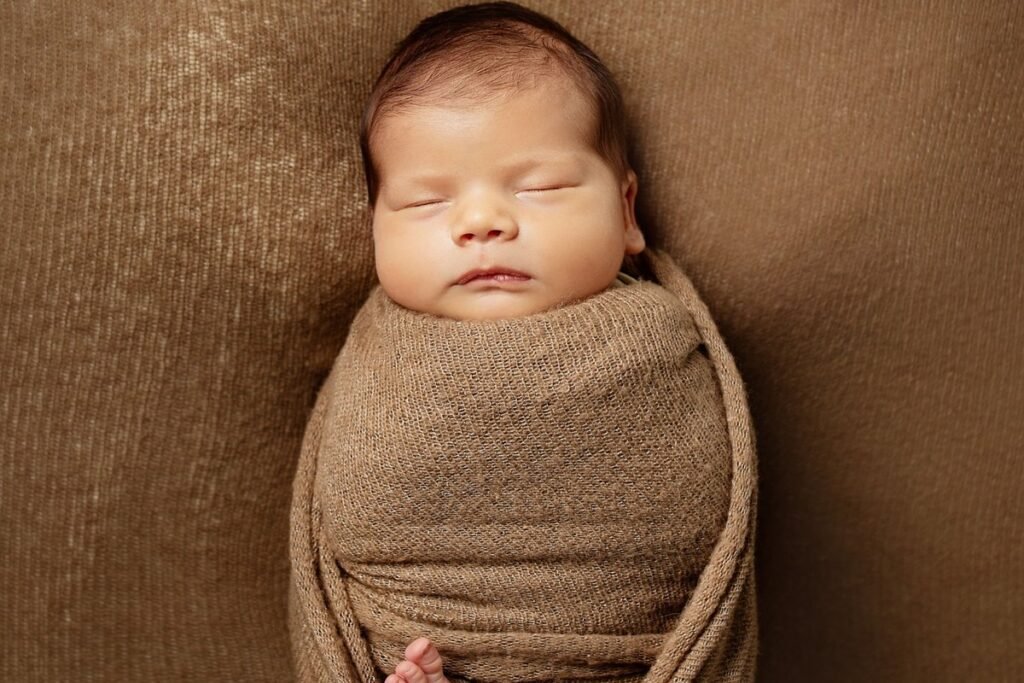
Swaddling can feel like magic during the newborn stage.
You wrap your baby up, their startle reflex settles, and suddenly that tiny person who seemed determined not to sleep looks calm and cosy.
Then, just as everyone gets used to it, you realise the swaddle cannot last forever.
So, when should you stop swaddling your baby?
The answer is less about reaching a specific age and more about your baby’s development. You should stop swaddling as soon as your baby shows signs of trying to roll. While many babies reach this stage during the first few months, some begin showing signs much earlier.
And yes, the transition can temporarily disrupt sleep. But with the right approach, most babies adapt.
Quick answer: Stop swaddling as soon as your baby shows signs of trying to roll. Do not wait until they are confidently rolling. You can prepare for the transition earlier by gradually freeing their arms, but once signs of rolling appear, their arms should be free for sleep.
Why do babies like being swaddled?
Newborns have spent months in a very contained environment.
After birth, they suddenly have considerably more freedom to move their arms and legs. They also have a strong Moro reflex, commonly called the startle reflex, which can cause their arms to suddenly extend and sometimes wake them.
Swaddling provides containment and can help reduce these startle-related wakings. It can also be a useful part of a newborn’s calming routine.
This is why swaddling is one of the 5 S’s for soothing babies.
But swaddling is a temporary newborn tool. As your baby’s mobility increases, restricting their arms can become a safety issue.
When should you stop swaddling your baby?
There is no magic date when every baby needs to stop.
You may see advice suggesting two months, three months or four months. In reality, babies develop at different rates.
The important milestone is showing signs of attempting to roll.
The American Academy of Pediatrics advises parents to stop swaddling as soon as these signs appear. Some babies can begin working towards rolling as early as two months, and rolling can happen earlier than parents expect.
So rather than thinking:
“My baby is only 10 weeks old, so we still have time.”
Think:
“Is my baby beginning to show signs of rolling?”
Their development matters more than the number on the calendar.
Signs it’s time to stop swaddling
Your baby does not need to complete their first perfect roll before you make the change.
Watch for increasing mobility and early attempts to roll.
Signs can include:
- rocking from side to side
- twisting their hips
- rolling onto their shoulder
- increasingly strong body movements
- attempting to turn from their back
- pushing and shifting their body more during sleep
- showing increased strength and mobility during tummy time
Your baby may also begin fighting or repeatedly escaping the swaddle. That does not necessarily mean rolling is imminent, but it can be a good opportunity to start transitioning before you need to stop for safety reasons.
If your baby’s Moro reflex is becoming less disruptive, this can also make an earlier transition easier.
Why is swaddling unsafe once a baby starts rolling?
A swaddled baby has restricted use of their arms.
If they roll onto their stomach while swaddled, they may not have the freedom of movement they need to reposition themselves.
This is why you should not wait to see what happens after your baby starts rolling.
Once they are showing signs of trying to roll, arms need to be free.
Your baby should also continue to be placed on their back at the beginning of every sleep, following current safe sleep recommendations.
How to transition out of the swaddle
If your baby is not yet showing signs of rolling, you have more flexibility in how you make the transition.
Some babies barely notice the change.
Others seem personally offended by the entire idea.
Neither reaction means you are doing anything wrong.
Option 1: One arm out
If your baby’s swaddle is designed to be used this way, you can start with one arm free.
Give your baby a few nights to become accustomed to the extra movement before freeing the second arm.
Eventually, transition completely out of the swaddle and into an appropriate arms-free sleep sack if you choose to use one.
Always follow the manufacturer’s instructions for the swaddle you are using.
Option 2: Start at bedtime
If you want to make the transition gradually, bedtime can be a useful place to start because sleep pressure is typically stronger.
Try putting your baby down with one or both arms free at bedtime while continuing to offer your usual settling support.
Once bedtime becomes easier, you can introduce the change to naps too.
You could start with the first nap of the day, which is often easier for babies than later naps.
Option 3: Stop cold turkey
Some babies genuinely do better when the change is made all at once.
If your baby is generally adaptable and settles relatively easily, you may simply stop swaddling and move directly to an arms-free sleep sack.
You might have a couple of unsettled nights, or your baby might surprise you and barely care.
This is where temperament matters.
A gradual approach is not automatically better. The best option is the one that is safe and suits your individual baby.
What if my baby is already trying to roll?
This changes things.
If your baby is showing signs of attempting to roll, do not continue gradually swaddling their arms while they sleep.
At that point, safety takes priority over making the transition slowly.
Move to arms-free sleep.
You can still make the adjustment easier by offering more support in other ways, such as rocking, patting, shushing or cuddling while your baby gets used to having their arms free.
What should you use after a swaddle?
For many families, the easiest next step is an arms-free sleep sack or wearable blanket.
This maintains a familiar bedtime cue and provides warmth without restricting your baby’s arms.
The American Academy of Pediatrics states that sleep sacks that do not swaddle and allow a baby to move freely can continue to be used. Weighted swaddles and weighted sleep products are not recommended.
Whatever you choose, your baby’s sleep space should continue to follow safe sleep guidelines, including a firm, flat sleep surface and a clear cot without pillows, bumpers, positioners or loose bedding.
Will my baby’s sleep get worse after stopping the swaddle?
Possibly, temporarily.
Your baby has become accustomed to sleeping with their arms contained. Suddenly those hands can touch their face, arms can move freely and the startle reflex may still be present.
You might notice:
- more difficulty settling
- increased startling
- shorter naps
- more night waking
- hands constantly touching the face
- more movement in the cot
This adjustment is normal.
Try not to respond to one difficult night by immediately deciding the transition has failed.
Give your baby time to practise.
You can offer additional reassurance while keeping the new boundary consistent.
Is stopping the swaddle related to the 4 month sleep regression?
Sometimes the timing overlaps.
Around this period, babies are becoming more mobile while their sleep is also undergoing significant developmental changes.
This means you may stop swaddling at roughly the same time your baby begins waking more frequently, taking shorter naps or struggling to settle.
It can feel as though removing the swaddle caused everything.
But the 4 month sleep regression and swaddle transition are separate developmental changes.
If your baby is showing signs of rolling, do not delay removing the swaddle because you’re worried about making the regression worse.
Safety comes first.
Frequently asked questions about stopping swaddling
Can I swaddle my baby if one arm is out?
Before signs of rolling, a one-arm-out transition can be useful if your particular swaddle is designed to be used that way. Once your baby shows signs of trying to roll, move to both arms free.
Should I stop swaddling at 8 weeks?
Not every baby needs to stop on exactly the same day. However, rolling can begin earlier than many parents expect, so watch your baby’s development carefully. The American Academy of Pediatrics recommends stopping as soon as your baby shows signs of attempting to roll.
Can I keep swaddling if my baby hasn’t rolled yet?
If there are no signs of attempting to roll, you may have time to transition gradually. Starting before rolling begins can actually make the change easier because you can introduce arms-free sleep without having to make an immediate switch.
What if my baby won’t sleep without the swaddle?
Expect some adjustment. Keep the rest of your bedtime routine familiar and offer additional settling support if needed. You are not creating a bad habit by helping your baby through a transition.
Can I use a weighted swaddle or sleep sack?
Weighted swaddles and weighted sleep products are not recommended by the American Academy of Pediatrics. Choose a non-weighted product that is appropriate for your baby’s developmental stage.
Your baby’s sleep may need time to adjust
Moving away from the swaddle can feel intimidating, especially if it has been one of the few things reliably helping your newborn sleep.
But this transition is also a sign that your baby is developing.
If you have the opportunity to anticipate it, you can experiment with one arm out or introduce arms-free sleep gradually. If your baby is already attempting to roll, however, the priority changes and the swaddle needs to go.
Then give your baby time.
Some will adapt almost immediately. Others need more support while they learn how to sleep with their new freedom of movement.
As a Certified Infant & Child Sleep Consultant, I consider your baby’s age, development, temperament, sleep environment and current settling habits when working out how best to support these transitions.
If stopping the swaddle has suddenly turned naps or nights upside down, book a free 15-minute discovery call with me. We can talk about what is happening with your baby’s sleep and what kind of support would be most helpful for your family.